

What Was The First Cartoon To Win The Best Animated Short Oscar?
oscars 2019
Every Oscar Winner for Blithe Brusque Subject area, Ranked
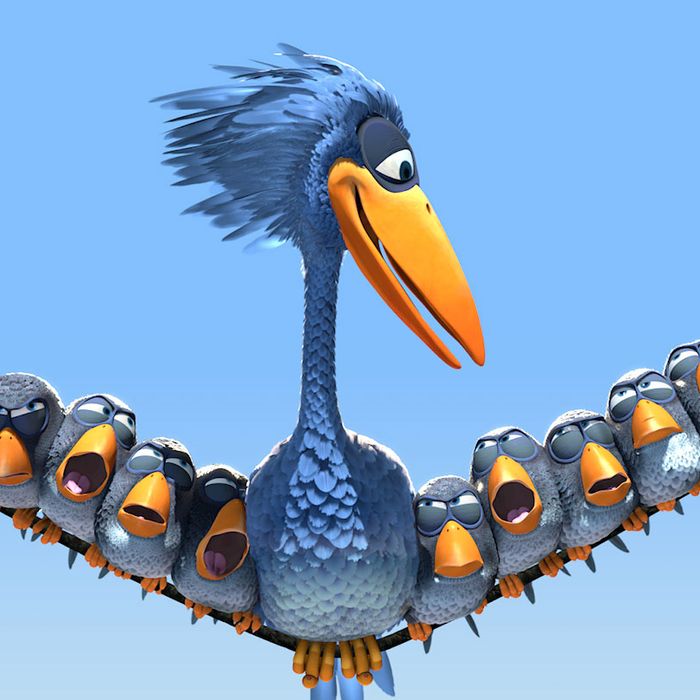
Photo: Walt Disney Pictures
This story has been updated to include the recent Oscar winner "Bao."
Though animation has been around since before the first University Awards, it wasn't until the fifth Oscars ceremony, for films released between 1931–32, that the University created the All-time Short Discipline categories, including one for animation. At that point, every major studio had an animation wing producing cartoons for theaters, and these cartoons dominated the Oscars for almost the first 30 years. When the studios shuttered their animation departments in the early 1960s, independent and international filmmakers began to dominate category, a trend that reached its peak in the '70s and '80s. By the beginning of the 1990s, studios like Pixar, Aardman, and Blue Sky helped mainstream animation in the English language-speaking world and brought a newfound legitimacy to the fine art form that had not been seen since the golden age of the '40s and '50s.
Hailing from more than twenty countries and encompassing almost every style, the 87 winners of the Best Animated Short Subject field Oscar double every bit a microcosm of the history of world animation. Watching them also reveals that the definition of what constitutes animation has expanded from the colored cells of "Three Picayune Pigs" to the cutouts-on-acetate collage of "Frank Moving-picture show." What follows is an effort to rank all 87 winners, from a recent dud to some timeless classics that help define the medium.
87. "Dear Basketball" (2017)
Every Oscar category has its Crash — the winner that makes you go, "What the hell were they thinking?" "Beloved Basketball game" is substantially a sappy, four-minute Nike commercial that had no business organisation beingness nominated. Making matters worse, it gave accused sexual attacker Kobe Bryant an Oscar at the start post-#MeToo ceremony. Although most nominees and winners are invited to join the Academy each year, Bryant was denied an invite due to his lack of a footprint in the industry, although the assail may take had something to do with information technology too.
86: "Logorama" (2009)
"Logorama" makes every building, person, and prop out of corporate logos. It'south cool to look at, but it makes its signal after the first two minutes. The rest of it is an overblown activity sequence with horrible dialogue and phonation-over work.
85. "Sundae in New York" (1983)
In his 1983 essay "1,112 and Counting," gay activist Larry Kramer accused then-New York mayor Ed Koch of allowing gay men to die of a illness that had recently been dubbed Acquired Immune Deficiency Syndrome, writing that he had "non allow[ed] himself to be perceived by the not-gay earth as visibly helping usa." (That Koch was less-than-forthcoming about his own sexuality adds some other layer to the story.) That aforementioned year, Jimmy Picker fabricated this astoundingly tone-deaf Claymation brusk wherein Koch (voiced by an impressionist) improvises his own version of Kander & Ebb's hit vocal "New York, New York." Past the time he won his Oscar, at least 200 more gay men had died from AIDS-related illnesses.
84. "Knighty Knight Bugs" (1958)
The just Bugs Bunny drawing to go an Oscar, "Knighty Knight Bugs" is the animated equivalent of Al Pacino winning for Aroma of a Woman instead of Dog Day Afternoon. Its mediocrity is particularly egregious given that most of Bugs'southward greatest films — including "What's Opera Doc?," regarded by some every bit the greatest drawing of all time — weren't even nominated.
83. "The Little Orphan" (1948)
In this Tom and Jerry short, Jerry adopts a starving orphan named Nibbles and treats him to a Thanksgiving feast, while he and Tom enact Pilgrim-Indian fights. The merely thing worse than this cartoon's racial and historical insensitivity is that information technology's non funny.
82. "Frank Moving-picture show" (1973)
This autobiographical film presents an unfolding collage of magazine cutouts glued onto acetate cells, while animator Frank Mouris tells his life story over dueling audio channels. Although considered an animation landmark, it's a headache-inducing experience that's too overwhelming to watch more than once.
81. "A Greek Tragedy" (1986)
This cartoon about three maidens holding upwards a building is a situation stretched out to half-dozen minutes. That same year, Pixar got its get-go nomination for "Luxo Jr.," which, at merely three minutes, tells a satisfying story about 2 lamps with distinct personalities.
80. "The Two Mouseketeers" (1951)
Tom, Jerry, and Nibbles engage in swordplay in 18th-century France. This short features some good music, merely it's 1 of the weaker cartoons in the series.
79. "Milky way" (1940)
Disney'due south 8-year winning streak broke this yr when none of their cartoons received a nomination. The winner, "Milky Mode," is an MGM cartoon almost three kittens produced by Rudolf Ising and Hugh Harman, animators who bounced around from studio to studio during the golden age of animation. Many of their cartoons, like this ane, are as vapid and cutesy as "The Happy Fiddling Elves" cartoons from The Simpsons. Merely they deserve a place in history for creating the MGM and Warners animation studios, which released the other two shorts nominated in 1940: "Puss Gets the Kick," the debut film of Tom and Jerry, and "A Wild Hare," which introduced the globe to a rabbit who casually asked a hunter, "What's upwardly, doctor?"
78. "The Fly" (1980)
This brusk offers an insubstantial jaunt from a fly'south indicate of view every bit it flies effectually a house.
77. "Surogat" (a.k.a. "Ersatz," a.grand.a. "The Substitute") (1961)
The first completely foreign-made cartoon to win, this is a Yugoslavian brusque in which every prop, background, and person is inflatable. At that place are some cool moments when the protagonist manipulates the blitheness and changes the scenery, but on the whole, it'southward but weird for weirdness'due south sake.
76. "Three Orphan Kittens" (1935)
This Silly Symphony features cute Disney kittens getting in trouble. Nothing makes information technology stand out from like Disney cartoons, nor does annihilation human action equally testing ground for new camera techniques or styles, which the later Featherbrained Symphonies became during the '30s. And information technology gets docked points for the racial stereotypes.
75. "The Pinkish Phink" (1964)
This marked the cartoon debut of the Pink Panther, the animated character who first appeared in the master titles of Blake Edwards's 1963 movie of the same name. Like the Panther's other cartoons, this one suffers from repeating one joke over and over — the Panther paints everything pink while his foil wants to pigment everything blueish. That said, it's always worth it to hear Henry Mancini'south theme music.
74. "Lend a Hand" (1941)
Mickey Mouse's just appearance on this list, "Lend a Paw" mostly focuses on Pluto, who debates between his inner angel and devil whether to save a small kitten. The film, with its message to help friends in demand, heavily foreshadows a conflict to come up: Two months later its release, the The states entered the Second World State of war and Disney converted his studio into a propaganda factory.
73. "Is It Ever Correct to Be Right?" (1970)
Orson Welles narrates a parable about a world divided because everybody feels the need to be right. The animation and the music are bad, but the story is a skilful reminder of how nosotros can better ourselves with a trivial humility.
72. "Magoo'due south Puddle Jumper" (1956)
UPA'southward Stephen Bosustow produced all three of 1956's nominees, guaranteeing him an Oscar that nighttime. Here, Mr. Magoo gets a car that defies the laws of gravity and can drive underwater. It's typical Magoo fare, combining jokes about nearsightedness with the beauty of UPA's animation.
71. "Leisure" (1976)
A recounting of man's pursuit of leisure from caveman days to the present, "Leisure" features a absurd mixed-media arroyo but it's not very engaging.
seventy. "Great" (1975)
If you were confused when Kenneth Branagh came out at the 2012 Olympics Opening Anniversary looking like Abraham Lincoln, "Great" offers a musical biography about who he was actually playing: Isambard G. Brunel, the English equivalent of Thomas Edison. The songs are tricky, but information technology'due south basically a Schoolhouse Rock video stretched to half an hour.
69. "The Tortoise and the Hare" (1934)
Max Hare, the star of this fairly standard retelling of the Aesop'due south fable, has been cited past many as an inspiration for Bugs Bunny, who would plough this story on its head in "Tortoise Beats Hare."
68. "The Country Cousin" (1936)
Another retelling of a legend, this time with the creatures who made the studio famous. It's e'er weird watching Disney mice who look nothing like Mickey, so the blitheness takes some getting used to. The all-time function is the music, which alternates between land banjo and a Gershwin-like motif, to reflect the two characters.
67. "When Magoo Flew" (1954)
In 1949, UPA released a cartoon called "Ragtime Conduct" which worried their distributor, Columbia Pictures, because bears were non popular characters. The film was a hit, not because of the bear, simply considering it was the debut of Mr. Magoo, a nearsighted erstwhile man who became UPA'south showtime breakout character. Magoo was one of the beginning human characters to have his own drawing serial, and information technology became a signature part for histrion Jim Backus (who would later play millionaire Thurston Howell 3 on Gilligan's Isle). In this entry, Magoo mistakes an airplane for a movie house and walks on top of it mid-flight. The jokes abound a little stale, but any UPA cartoon is worth watching for the animation, and the shots of Magoo'south silhouette walking on the plane are gorgeous.
66. "Winnie-the-Pooh and the Blustery Day" (1968)
The last of Walt Disney's astonishing 26 Academy Awards came posthumously for the second of the studio's iii Winnie-the-Pooh cartoons. One of the terminal projects he light-green-lit, Disney chose to release these shorts one at a time to introduce the characters to American audiences — hard to believe, given how famous they accept become. That said, the short reveals how the animation division was starting to go afloat without Walt's presence, including recycling some quondam ideas. The Heffalumps and Woozles sequence is the best example of this, since it tries to copy the demented fantasia of Dense's "Pink Elephants on Parade" number simply fails to equal information technology. The best element of the drawing is the voice interim, a reminder that several of the actors voiced these characters for more 30 years.
65. "Yankee Doodle Mouse" (1943)
Tom and Jerry become at it, WWII style. Sticks of dynamite are tossed back and along, Jerry uses a brassiere as a parachute, and the score offers an enjoyable mix of patriotic anthems.
64. "Father and Daughter" (2000)
Of the three nominees for 2000, "Father and Girl" got all the accolades, and information technology's easy to see why: Information technology tugs at the heartstrings with a simple story of a trivial girl who spends her life waiting for her male parent to return after he abandons her. The second nominee was similarly bleak, an adaptation of Daniel Defoe'southward Journal of the Plague Year called "The Periwig Maker." The third nominee, however, was Don Hertzfeldt's "Rejected," which went on to spawn endless internet memes and ridiculous catchphrases like "I am the queen of France!" Every bit film fans know, the Oscars don't necessarily predict which films will last.
63. "Manipulation" (1991)
The gags are funny and the special effects impressive in this brusk in which a cartoon human struggles to escape the sketchpad his animator has bars him to. Unfortunately, information technology can't help but pale in comparison to the classic Looney Tunes cartoon "Duck Amuck," which is The Godfather of fourth-wall-breaking, drawing-versus-animator cartoons.
62. "Flowers and Trees" (1931–32)
The first drawing ever to win depicts a love triangle between two slender trees and an evil stump who starts a forest fire out of revenge. Information technology features the usual dancing reeds, birds, and copse that appear in Disney'due south early Silly Symphonies, and the animation is coarse compared to later Disney efforts. What makes "Flowers and Copse" a landmark, nevertheless, is that it is the first cartoon — and technically, the beginning film — ever produced in three-colour Technicolor, the process that would after be used for Gone With the Wind, The Magician of Oz, and many other films. As e'er, Disney knew what the audiences wanted before they did.
61. "Piper" (2016)
Pixar has just about owned the All-time Blithe Characteristic category since it was first introduced in 2001, but for the next 15 years they went home empty-handed for their shorts. "Piper," about a cute immature sandpiper overcoming her fear of the water, broke that losing streak, just information technology's non ane of their best. Nevertheless, it's worth watching for the beautiful animation of the birds.
sixty. "A Herb Alpert and the Tijuana Brass Double Feature" (1966)
John Hubley's Storyboard Studios won its third and final Oscar for this charming blithe music video of 2 Herb Alpert songs: "Castilian Flea" and "Tijuana Taxi." (More on Hubley and Storyboard beneath.)
59. "Ferdinand the Bull" (1938)
Well-nigh 70 years before Bluish Sky'due south feature well-nigh this good-natured balderdash, Disney made its own version. Although popular at the time of its release, it's faded from the canon, probably because it never had follow-ups. The voice acting comes from Milt Kahl (ane of Disney's Ix Old Men) every bit Young Ferdinand, Jack Benny announcer Don Wilson serves the narrator, and Walt Disney himself plays Ferdinand's Mother.
58. "Tin Toy" (1988)
When Steve Jobs acquired Pixar for their computers in 1986, he didn't look to make any money off its modest animation division, and engineers wondered why the animators were even on the payroll at all given the company'southward lack of revenue. In 1988, knowing they were on thin ice, John Lasseter and his team asked Jobs for $300,000 to brand "Can Toy," a cartoon about a toy one-human-ring named Tinny escaping the clutches of a toddler. Jobs agreed, and the motion picture wowed audiences when it premiered, even though the animation hadn't been completed. The side by side year, "Tin can Toy" became the starting time estimator-animated brusque to win the Oscar. The only reason this cartoon is not higher on the listing is the animation — that babe is ugly, and in one shot where information technology falls over, it barely even touches the floor — but these problems are mostly due to the limitations of the technology. "Tin can Toy" served its purpose, legitimizing computer blitheness as an art course, and convincing Jobs to keep funding the blitheness unit. In 1991, Lasseter wrote a treatment for a feature moving-picture show virtually Tinny and a cowboy doll finding their way home. The title was Toy Story.
57. "The Crunch Bird" (1971)
56. "For the Birds" (2001)
At two minutes, "The Crunch Bird" is the shortest cartoon to win the Oscar, and "For the Birds" isn't much longer. They're both one-joke cartoons almost birds, but they're very funny jokes and they don't overstay their welcome.
55. "Speedy Gonzales" (1955)
The official debut of anybody's favorite Latino mouse, Speedy Gonzales brings cheese to the poor Mexican mice while getting the improve of cheese factory guard Sylvester every time. In 1 cool gag, he runs through Sylvester'southward open mouth and exits through the dorsum of his tail, the kind of gag that Warners directors similar Tex Avery and Bob Clampett pioneered. While Speedy may strike some as a stereotype today, he has always been popular among Latinos, and a feature film where he will be voiced by comedian Eugenio Derbez is in evolution.
54. "Information technology's Tough to Exist a Bird" (1969)
Ward Kimball became the merely one of Disney's Nine Onetime Men (his nickname for his nine favorite animators) to win an Oscar with this xx-minute history of birds, narrated by a bird drawn to resemble the great animator himself. Kimball, who drew most of the characters in Alice in Wonderland, was a principal of zaniness, and he pulls out all the stops here. The film'south combination of animation and live action makes it the first mixed-media curt to win, and it climaxes with a chaotic montage reminiscent of Terry Gilliam's work on Monty Python — which, by sheer coincidence, premiered 2 months before "It'due south Tough to Exist a Bird" was released.
53. "The Box" (1967)
In a sweet cartoon nearly an old homo with a mysterious box, the sparse setting, heavily percussive score, and final reveal add to the affect.
52. "Feast" (2014)
In a heartwarming story that becomes also sentimental in the final 30 seconds, a cute dog who loves eating unhealthy food reunites his owner with his girlfriend after she dumps him over his bad diet. But the dog is really cute.
51. "Mouse Trouble" (1944)
Tom gets a book of ways to trap mice and fails at all of them in a short that's pretty much just a serial of mishaps. Just it also includes one of the all-time jokes in any Tom and Jerry cartoon, when a beaten-upwards Tom turns to the camera and says in a basso profundo voice, "Don't you lot believe information technology!"
50. "Quiet, Please!" (1945)
"Repose, Please!" does a slap-up task at stacking the deck against Tom, who has to prevent Jerry from waking up Fasten the canis familiaris. The best joke involves him communicable lightbulbs Jerry tosses downwardly before they can shatter on the floor, a joke that pays homage to West.C. Fields'due south It's a Souvenir, although the dial line is much more fierce: Jerry plugs Tom's tail into a socket and he lights up like a Christmas tree.
49. "La Maison en Petits Cubes" ("The House of Small-scale Cubes") (2008)
Japanese blitheness had never been recognized in this category until "La Maison en Petits Cubes," the story of a fisherman in a flooded home who looks back on his life. The moving picture takes on Proustian dimensions by using a smoking pipe as the goad for the old man's memories, which come up to life in beautiful drawings by animator Kunio Katō. When he got his Oscar, he brought down the house by catastrophe his speech with "Domo arigato, Mr. Roboto!"
48. "Tango" (1982)
Except for the producers of La La Land, no one ever had a worse Oscar nighttime than Zbigniew Rybczyński, the Polish director of "Tango" who spoke limited English language. Subsequently silencing the orchestra who tried to play him and his translator off, he went outside to smoke a cigarette, Oscar still in hand, and left his ticket in the theater. When the security baby-sit refused to permit him back inside, he screamed, "American pig, I have Oscar!" and supposedly hit him, landing him in jail for the night. The picture show itself is a cool experiment where live-activity characters repeat actions and movements in an impossibly large room, and more are added until it becomes like the stateroom in the Marx Brothers' A Night at the Opera. You'll want to picket it more than once to see how the characters overlap with each other.
47. "Mr. Hublot" (2013)
French steampunk creative person Stephane Halleux provided the inspiration for "Mr. Hublot," which brings his futuristic universe to life. The story is piffling more than your standard "homo and dog friendship" tale, but the domestic dog being a robot gives it a clever spin and the animation of the Blade Runner–like metropolis looks spectacular.
46. "The Fantastic Flying Books of Mr. Morris Lessmore" (2011)
Animator and children's volume author Neb Joyce co-directed this curt most a homo transported via tornado to a magical library with flying books. The animation reflects Joyce's whimsical manner, and there are some funny gags with the books, peculiarly when Lessmore has to perform surgery on i of them.
45. "The Lost Thing" (2010)
Narrated by songwriter Tim Minchin, "The Lost Matter" depicts a friendship between an awkward boy and a mysterious tentacled thing that looks like information technology wandered out of "Mr. Hublot." Information technology'south a touching story with a solid dial at the end, and the scene in the Section of Odds and Ends doubles as a nice homage to Terry Gilliam's Brazil.
44. "A Close Shave" (1995)
Is at that place a single more expressive graphic symbol in all of animation than Gromit, Wallace's dog companion? With no mouth, he has to convey everything through his brow and his eyes, combining Chaplin's warmth with Keaton's deadpan. Here, he and Wallace uncover a plot to kidnap sheep and make them into pet food. As ever, Gromit plays detective and activeness hero while the bumbling Wallace is just lucky to be along for the ride. The film also introduced audiences to Shaun the Sheep, who afterwards got his own Television set show and moving picture series. The simply trouble is that the half-60 minutes running time works against the film, due largely to the overstuffed final action sequence where manager Nick Park tries to top his efforts from the preceding Wallace and Gromit movie. (More about that one later.)
43. "Johann Mouse" (1952)
In 1940, MGM animators William Hanna and Joseph Barbera teamed up a cat named Jasper and a mouse chosen Jinx in "Puss Gets the Boot," simply it didn't go out much of a mark. A year later, they produced a follow-upwardly film that redesigned the characters and renamed them Tom and Jerry. They became MGM's breakout stars, and Hanna and Barbera would get on to make more than 100 cartoons with them, netting MGM thirteen Oscar nominations and seven wins. The last was for "Johann Mouse," wherein Tom and Jerry become a musical awareness in 1890s Vienna. There are some funny jokes involving Tom's piano playing, and the music, performed by the MGM orchestra, is a reminder of how the former studios spared no expense on their cartoons. After MGM shuttered its animation unit in 1957, Hanna and Barbera gear up their ain company and went on to create The Flintstones, The Jetsons, Scooby-Doo, and dozens of other memorable TV cartoons. Every bit with Disney, it all started with a mouse (and a true cat).
42. "The Danish Poet" (2006)
Liv Ullmann narrates a touching story near how coincidence and chance shape 1'due south destiny, with a nice twist ending. She as well plays all the characters, and her lilting tones help make this cartoon a lovely experience.
41. "Special Delivery" (1978)
A man'southward refusal to clean the snow off his front end porch leads to to the death of his mailman — and hilarity ensues. "Special Commitment" has just 1 purpose: to entertain, and information technology does then admirably.
40. "Toot, Whistle, Plunk and Boom" (1953)
Co-directed by "Information technology's Tough to Be a Bird" director Ward Kimball, "Toot, Whistle, Plunk and Smash" tells the history of music from cavemen to the nowadays 24-hour interval. This entertaining cartoon was the first produced in Cinemascope, and its flat, stylized blitheness — which recalls UPA — is a radical departure from previous Disney films. Although the studio produced some inventive and entertaining short cartoons during the 1950s, by the end of that decade it had more or less given up on them, as the company moved into the black by diversifying into Telly, live-action films, and theme parks.
39. "Quest" (1996)
This German student film depicts puppets traveling through various lands of sand, stone, and machinery to find the source of a mysterious dripping racket. The animation is extremely cool, especially in the backgrounds. The merely trouble is the ending, which seems profound at first merely feels a little too "educatee motion-picture show" on 2nd viewing.
38. "Closed Mondays" (1974)
Managing director Bob Gardner, the inventor of Claymation, spent xiv months with his filmmaking partner Volition Vinton making this terminate-motion pic about a drunk who wanders into a museum afterwards hours and finds the artwork coming to life: an abstract painting turns into a series of swirling musical notes; a slot machine with lips speaks abstract verse; and a traditional painting of a scullery maid talks back to him. Unlike "The Critic" (to exist discussed beneath), which scoffs at art, "Closed Mondays" speaks to its power to involve united states through the emotions information technology conjures.
37. "Bao" (2018)
Domee Shi, a Chinese-Canadian immigrant, became the offset woman to direct a Pixar short with "Bao." She shared her Oscar with producer Becky Neiman-Cobb, making this the first animated short for which a female person directing and producing team shared a prize. Shi based this heartwarming story of a mother who raises a dumpling from birth to adulthood on her own relationship with her overprotective mother. The use of food as a metaphor for parenting is specific to Chinese civilization: Shi has said in interviews that Chinese parents substitute "Have you lot eaten still?" for "I love y'all." This specificity allows "Bao" to express universal truths about parents and children. Before long earlier it premiered concluding summer, Pixar founder John Lasseter announced he would leave the company after he was outed for sexually harassing women and fostering a "boys society" mentality that kept female employees from ascension through the ranks. Hopefully, "Bao" is a sign of things changing for the amend, not only at Pixar, simply throughout Hollywood itself.
36. "Paperman" (2012)
Subsequently dominating this category in its early on years, Disney won its showtime Animated Short Oscar since "Information technology'due south Tough to Exist a Bird" for "Paperman," which is likewise the starting time (then far only) blackness-and-white cartoon ever to win. The main character is an bearding office clerk inspired by one spot of color — a woman's ruby lipstick kiss on a piece of paper — to become after her, with papers piling upwards around him. The style and the lack of dialogue serve the story beautifully.
35. "Deception" (1984)
Take you lot e'er played charades with your friends and gone nuts when they tin't guess what you lot're miming? Charade takes this premise to a hilarious extreme, as the chief grapheme makes it obvious he'south miming titles similar Jaws and Superman, only his friends' guesses completely miss the marker. At the same time, i player becomes the first person in history to successfully mime The Concise Oxford Dictionary of Rotations, which the others get right abroad.
34. "Residual" (1989)
Like the best stop-movement films, "Balance" leaves viewers breathless, wondering how the animators did it. Set atop a floating platform in infinite, information technology depicts five identical men fishing for a rare device and causing the platform to tilt back and forth whenever they walk. It also inspired the finale of National Treasure: Volume of Secrets.
33. "The Dot and the Line" (1965)
Chuck Jones won his just competitive Oscar for this adaptation of a book past Norton Juster virtually a male person Line who seeks the love of a female Dot. The animation is unlike whatsoever of Jones's Warners cartoons, echoing the work of abstract pioneer Oskar Fischinger, and the scenes where the Line morphs from two to iii dimensions are beautifully done — all while Robert Morley provides humorous math puns in his dry out vox.
32. "Crac!" (1981)
1 of the greatest things near animation is the way information technology tin can imbue inanimate objects with emotions. In "Crac!" the protagonist is a rocking chair who begins his life when a French-Canadian farmer builds it from the wood of a tree. Over its life, it observes the farmer, his married woman, and their family unit for generations. Like the opening montage of Up, the film collapses a century into a niggling less than 15 minutes, meeting harmoniously in the final moments, when the chair reflects on all it has seen in its final abode, an art museum.
31. "The ChubbChubbs!" (2002)
Sony Animation won its kickoff and (so far) only Oscar for this estimator-animated sci-fi film about an alien janitor with dreams of existence a karaoke vocalist who must face off with the menacing ChubbChubbs. The film is filled with inside jokes for sci-fi nerds, including cameos from Yoda, Eastward.T., and Jar-Jar Binks — who dies in the opening two minutes. The twist at the end is swell likewise.
30. "Moonbird" (1959)
UPA'southward John Hubley was forced to become into TV commercials after he was blacklisted and thrown out of the company, but he found success producing the advertizement campaign for Maypo Oatmeal, which starred an animated kid played by Hubley'due south son Mark. Using the coin from these ads, he and his wife Faith Hubley fabricated "Moonbird," a motion picture based on a tape recording of Mark and his blood brother Ray playing together. Watching all these Oscar winners chronologically, "Moonbird" is a radical divergence in style from any of the ones earlier it, going beyond the flatness of UPA to create characters based entirely on crudely drawn outlines. Its limitation is the fact that the two boys' improvisation can't help but lag at times, but it was a huge step forward for Hubley. A 1968 follow-upward called "Windy Day" uses an improvisation by his two daughters, and is even amend.
29: "A Christmas Carol" (1972)
This made-for-TV film of Charles Dickens'south most famous story was such a hit when it aired in 1971 that it received theatrical distribution the following year, assuasive information technology to authorize for the Oscar (the rules were then changed to forestall this from happening again). It's a quite effective adaptation, aided by Alistair Sim and Michael Hordern reprising their roles equally Scrooge and Marley from the famous 1951 movie. Marley in detail is a standout — whenever he speaks, he just opens his oral cavity wide and unleashes the words with no lip movements. Bonus points for including the shriveled children representing Ignorance and Want, a powerful scene from the book cutting from nearly adaptations. It's only weakness is that at 25 minutes, information technology feels rushed, particularly when Scrooge changes his ways at the end.
28. "The Old Mill" (1937)
As product moved alee on Snow White and the Seven Dwarfs, Disney used his shorts to experiment with the technology he knew would brand his first characteristic-length film stand out. The near famous of these is "The Old Mill," the first animated cartoon to use the multiplane photographic camera. This device placed a photographic camera atop multiple planes of drinking glass to provide a depth of field never before seen in animation. Just as he had embraced Technicolor before live-action filmmakers, Disney embraced deep-focus cinematography four years before Denizen Kane, making this curt about animals weathering a bad tempest wait like it was shot by Kane cinematographer Gregg Toland, and the storm itself is one of the almost suspenseful scenes in any cartoon.
27. "Tweetie Pie" (1947)
Director Friz Freleng threatened to quit Warner Bros. when producer Edward Selzer opposed his pairing of a bird named Tweety and a true cat named Thomas (later renamed Sylvester), but "Tweetie Pie" would net Selzer and the Looney Tunes their commencement Oscar. The picture showcases Freleng at his accented best, with his virtuosic matching of action to music and absurdist gags. What made him a genius, however, was how he imbued his characters with moments of humanity amidst the chaos, as when Sylvester throws his hammer on the ground after finishing a contraption. When asked why he included information technology, he just said, "Considering information technology'southward human." Upon Selzer's expiry, his Oscar was given to Freleng.
26. "Bob's Altogether" (1994)
"Bob'due south Altogether" introduced audiences to Bob and Margaret, the middle-aged British couple who got their own TV serial in the late 1990s, and it'due south the raunchiest cartoon to always win. Bob, terrified of turning forty, comes habitation and rants nigh his fears to Margaret without realizing she's planned a surprise political party for him — and worse, that all the guests are listening from their hiding spots as he insults them and walks effectually with no pants on. The awkwardness of the situation and Bob's callousness make this cartoon hard to watch, but at that place'south genuine tenderness between him and Margaret, and the conclusion, when she realizes information technology's ameliorate merely to be there for him, is touching.
25. "Deport Story" (2015)
Chilean manager Gabriel Osorio fabricated a haunting allegory of the Pinochet regime with this drawing about a bear whose toy music box tells how he was kidnapped from his family and sold into the circus. The designs on the mechanical music box, and how they contrast with the carry's earth, are gorgeously rendered, and the story is a moving tale nearly the relationship between storytelling and trauma.
24. "Der Fuehrer's Face" (1942)
Originally titled "Donald Duck in Nazi Country," the most famous of Disney's World State of war II cartoons depicts Donald Duck living nether Hitler's tyranny. His home, and well-nigh of the props, are shaped like swastikas, and he's forced to work in a munitions factory where every time a photo of the Fuehrer comes down the conveyor chugalug, he has to scream "Heil Hitler!" in his distinctive squawk. Ane of the rare Disney films that includes laugh-out-loud gags, information technology's as entertaining today as it was 77 years agone, and features one of the about absurdist moments in Disney animation, when the shells come up to life. The championship song became a hit for Spike Jones and his band. (It loses points for insensitive drawings of the Japanese, however.)
23. "Birds Anonymous" (1957)
If at that place is a patron saint of drawing voice-over it'south Mel Blanc, who, until his death in 1989, voiced well-nigh all of the Looney Tunes characters. Hither he plays Tweety, Sylvester, and a cat named Clarence who takes Sylvester to Birds Anonymous, AA for cats. His voices for Sylvester and Tweety are iconic, but it's every bit Clarence that he really excels here, using a flat vocalism to give him the appearance of control even though he reverts to his old ways at the terminate. Blanc said this was his favorite cartoon, and, every bit with Freleng, afterward producer Edward Selzer's death, Selzer's Oscar was passed on to Blanc.
22. "Peter and the Wolf" (2007)
Literalizing Prokofiev's famous piece, which is meant to alive in the imagination of its listeners, is a catchy undertaking, but manager Suzie Templeton's arroyo in this half-60 minutes moving-picture show produces excellent results. Her adaptation makes several smart changes to the story past setting information technology in contemporary times, making the hunters into bullies who torment Peter, and establishing a dynamic between the title characters that leads to a satisfying and touching determination. The end-motion animation seems to have influenced Wes Anderson's Fantastic Mr. Fox and Isle of Dogs.
21. "For Odour-imental Reasons" (1949)
Edward Selzer, who once unironically barked to his animators, "I don't see what laughter has to do with the making of blithe cartoons!" told Chuck Jones that nobody would laugh at his amorous French skunk, Pepé Le Pew, but in one case again he was incorrect. As in all his films, Pepé longs for Penelope Pussycat, whom he thinks is a skunk, only she wants zippo to do with him. This fourth dimension, however, Penelope goes after him at the end, freaking him out. Bonus points for writer Michael Maltese's hilarious faux-French dialogue.
20. "Munro" (1960)
"Munro" originated with a short story by Jules Feiffer, who turned xc last month and has spent his career drawing cartoons, illustrating children's books, and writing for stage and screen. The title graphic symbol is a bratty 4-year-onetime male child who gets drafted into the army as punishment, but none of his superiors believe it considering they're convinced anyone who enlists must exist motivated by the army's "cause." The savagery of the satire and the sense of humor of the blitheness, modeled after Feiffer's drawings, brand this cartoon as funny as a Mark Twain story. Interestingly, this very American short was the beginning Oscar winner made outside the United States — the animation came from Gene Deitch's studio in Prague, where he moved to receive financing and has lived for the past lx years.
nineteen. "Geri's Game" (1997)
Most people were introduced to "Geri'due south Game" when it played before A Issues's Life in 1998, inaugurating Pixar's tradition of showing one of their shorts earlier their features. It'due south one of the studio'southward funniest films, taking a elementary concept — an old man playing chess with himself — and executing information technology perfectly. The best part is that the sometime man develops 2 distinct personae throughout the game — 1 needy and conniving, one common cold and computing — and their interactions brand you think yous're watching two people instead of one. Geri cameos in Toy Story 2 as the repairman who sews Woody's arm back on.
xviii. "Anna and Bella" (1985)
17. "Bunny" (1998)
"Anna and Bella" is a mitt-drawn Danish short where ii sisters wait back on their lives and make peace over the heartbreaking way their friendship ended; "Bunny" is a boxing betwixt an elderly rabbit and a moth who won't exit him alone. They're tied here because they're structurally quite similar: They begin as one matter and become someplace you don't await, leading to two of the about moving endings on this list. Tom Waits provides the soundtrack for "Bunny" and sings over the cease credits.
sixteen. "Every Child" (1979)
Producer Derek Lamb made "Every Child" in conjunction with UNICEF's International Year of the Kid campaign. The story of a baby passed from home to habitation could have been maudlin in the incorrect easily, simply Lamb brings humour to it to past having every vox, audio effect, and musical note performed by a male person duo called Les Mimes Electriques. The brusque begins and ends with them in the recording studio, an image that acquires additional resonance when the child is finally adopted at the stop by two former men.
15. "Harvie Krumpet" (2003)
Adam Elliot's sympathy for the differently abled has always come through in his brusk films and his cult feature film Mary and Max. Like those, "Harvie Krumpet" combines a wry sense of humour with heartfelt drama to tell of a Polish émigré to Commonwealth of australia who never loses his optimism, despite the many setbacks that come up his way. Funny without being ironic, and moving without existence sentimental, Elliot never condescends to his characters or their situations. It's the piece of work of a true humanist.
fourteen. "The Sand Castle" (1977)
Thin in story merely rich in atmosphere, Co Hoedeman's "The Sand Castle" depicts humanoid, serpentine creatures who rise from the sand, build a fortress, and watch it crumble as the winds sweep it away. The film is a haunting tribute to the impermanence of art, all-time summarized past Calvin and Hobbes creator Bill Watterson, who once drew a Michelangelo-inspired painting on the ceiling of his dorm knowing it would exist erased past whoever lived there adjacent year. "My fondest memories," he said, "are [of] times like these, where things were done out of some inexplicable inner imperative, rather than considering the piece of work was demanded."
13. "The Moon and the Son: An Imagined Conversation" (2005)
John Canemaker, an NYU professor and historian who has written authoritative books on animation, is the son of an Italian who spent five years in jail for (allegedly) burning downward his hotel to collect the insurance money when John was a child. Ten years after his father'south death, he produced this "imagined conversation" between them with John Turturro as himself and Eli Wallach as the old homo. Told through a collage of animation, live-activity clips, and photographs, it tells a universal story about the necessary altitude children must keep from their parents, and a father who, to paraphrase Philip Larkin, was "fucked up in [his] plough / By fools in old-style hats and coats." It could have hands been a feature, especially with the stellar performances of Turturro and Wallach, just it's a remarkable accomplishment at half an hour.
12. "Three Little Pigs" (1932–33)
Where to begin with the impact of the almost popular drawing short ever made? The fact that it was held over in theaters for months by popular demand? The legions of merchandise it spawned? The catchy hit song that inspired the title of i of the most famous American plays? Leave it to Chuck Jones, who said information technology was "the first fourth dimension that everyone always brought characters to life … who looked alike and acted differently." This makes the short stand out from the standard Silly Symphonies because Fifer and Fiddler Pig are a fun-loving unit of measurement kickoff by their smart brother, Practical Sus scrofa. Separately, they get into problem, simply when they team up to outsmart the Big Bad Wolf, who dons a diverseness of unconvincing disguises to trap them (including a stereotypical Jewish peddler), they're unstoppable. Bonus points for the morbid family photos in Practical Sus scrofa's habitation of Uncle Earl (a football game) and Father (sausage links.)
xi. "Creature Comforts" (1990)
The short that launched a multiyear U.K. advertising campaign, Nick Park's "Creature Comforts" takes street interviews with real English homeowners describing their living conditions, and puts them in the mouths of stop-motion animals. The juxtaposition of the human voices with the animals is hysterical, similar the lion who speaks with a Brazilian accent about wanting more oestrus. Park's ability to use optics to convey emotions is unparalleled in end-motion blitheness (come across also, Gromit) and the deadpan, sullen looks he gives the animals only adds to the comedy.
10. "The Critic" (1963)
In 1962, Mel Brooks attended a screening of an abstruse drawing by animator Norman McLaren, where he heard an audience member mumbling sarcastic comments to himself. He then hired animator Ernest Pintoff to draw 3 minutes of abstruse imagery, to which he recorded an improvised commentary as a 71-year-old audience fellow member. As the images fly by, Brooks (and so only 36) yells out things like, "It must be some kind of symbolism — I retrieve information technology's symbolic of junk!" and "Two dollars out the window, Murray!" At iii minutes, it doesn't overstay its welcome, but it's besides hard not to desire more. Fortunately, we accept more, in the landmark sketches, comedy routines, movies and musicals that Brooks has created throughout his sixty-plus-year career in show business.
nine. "Mona Lisa Descending a Staircase" (1992)
Joan Gratz'due south film depicts the history of 20th-century art in seven minutes equally famous paintings suspension autonomously and transform into each other, equally when a Picasso of a nude girl in bed becomes Munch'southward The Scream. By placing these and other works side by side to each other, Gratz reminds us how all artists influence ane some other, even when their piece of work seems to have goose egg in common. Even more amazing is that the animation was achieved entirely through oil-based dirt, which she spread on a vertical easel. The effects of her thumbprints molding the dirt from frame to frame gives the paintings a living quality, similar to how Rex Kong's fur appears to motility in the 1933 picture show. It took Gratz eight years of planning and ii and a one-half of filming, and y'all tin can run across the endeavour.
8. "The Ugly Duckling" (1939)
In Danny Boyle'due south Steve Jobs, Apple co-founder Steve Wozniak asks Jobs, who can't pattern or lawmaking, what it is he actually does. Jobs replies, "Musicians play the instruments — I play the orchestra." The same could be said of Walt Disney. He wasn't a great animator; he didn't "invent" sound or colour cartoons; and he wasn't the first person to make an animated characteristic flick. But he understood how to use technology to its full extent; he was an expert judge of talent; and he had an impeccable cognition of dramatic storytelling. "The Ugly Duckling," the final Giddy Symphony cartoon, is a remake of a 1931 cartoon that sticks closer to the Hans Christian Andersen story. Unlike that one, which was played mostly for laughs, this adaptation features 1 of the saddest scenes in the Disney catechism, when the rejected duckling takes solace by playing with the one fauna who volition not judge him — a duck decoy. Disney once said, "The primary purpose of any of the fine arts is to arouse a purely emotional reaction in the viewer." That may not be true of all art, simply it'southward certainly true for much of his.
7. "The Hole" (1962)
John Hubley was never shy near his liberal politics, and fused them with animation in this powerful 1962 film where ii construction workers, voiced by character player George Matthews and jazz artist Empty-headed Gillespie, debate whether accidents are acquired by homo failings or karmic coincidence. Released the same twelvemonth every bit the Cuban Missile Crisis, the curt foreshadows films like Fail-Prophylactic and Dr. Strangelove, and given the context of the ceremonious-rights movement, also resonates as a conversation between a complacent white man and a person of color who can hear domestic dog whistles. Considering that all of it was improvised, it's remarkable that Matthews and Gillespie's dialogue becomes every bit profound as that of the ii tramps in Waiting for Godot. Information technology's an eternally relevant parable about the dangers of not listening closely to the alert signs around us.
6. "The Onetime Man and the Bounding main" (1999)
Despite Russia'southward history of animation, no Russian animator e'er won an Oscar until Aleksandr Petrov made this xx-infinitesimal adaptation of Ernest Hemingway's novel, producing what is possibly the finest screen accommodation of whatever of his books. He and his son spent ii and a half years paw-painting 29,000 oil pastel frames on glass, shooting each of them with a special IMAX camera, and moving the paints with their hands in between shots. This mode, reminiscent of the early-20th-century paintings of George Bellows, captures Hemingway's masculine prose, particularly in the scene depicting the old human being's 24-hr arm-wrestling standoff where it looks like y'all tin can see the muscles tensing. Information technology also captures his romanticism: The old man's dreams of Africa are beautifully fatigued, and Petrov departs from the novel past adding dream sequences where the protagonist swims and flies alongside his beloved fish. Denis 50. Chartrand and Normand Roger provide the beautiful score.
5. "Ryan" (2004)
"We don't see things equally they are, nosotros see them as we are," said Anaïs Nin. This quote cuts to the centre of "Ryan," Chris Landreth's documentary nigh Canadian animator Ryan Larkin, whose two short films, "Walking" and "Street Musique," made him a rising star in '70s blitheness. By the time they met in the early 2000s, Larkin had been living on the streets of Ottawa for more than than 20 years, a victim of alcohol and drug addiction. Landreth worked for two and a one-half years on the motion-picture show, recording interviews with Larkin and then working with a squad of animators to depict the characters as oblong beings with holes in their bodies and faces that represent their psychological torment. When those wounds are touched on, spikes and colored lines emerge from their faces. What's more, none of the people were drawn through motion-capture, an astonishing achievement given how realistic their movements are. Landreth's movie rescued Larkin from obscurity: Upon his decease in 2007, he was working on his beginning animated flick in more than 30 years, "Spare Change," which was completed the post-obit year past his collaborator Laurie Gordon.
four. "Gerald McBoing-Boing" (1950)
After leaving the Disney studios during the infamous 1941 strike, John Hubley, Steve Bosustow, and a group of young animators created United Productions of America, known as UPA. Although the studio produced piece of work throughout much of the 1940s, they didn't reach mainstream recognition until they adjusted the Dr. Seuss record "Gerald McBoing-Boing," the story of a lilliputian male child who tin can only speak in sounds. Its success sent shock waves through the industry: Here was a radical departure from your typical blithe cartoon, with no cute animals, no cartoon violence, and an intentionally unrealistic animation style. The film'southward backgrounds flow seamlessly into each other (there are no walls), with locations changing only through props. Their color changes with the ups and downs of Gerald'southward trajectory: When he'due south happy, both he and the screen are vivid yellow, but at his lowest signal, nighttime dejection and blacks dominate. The flat, limited animation allows for expressionistic camera angles, like the famous shot of Gerald walking up the stairs, inspired past Ballad Reed's The Fallen Idol. The brusque fabricated UPA a force in the industry, and 70 years after its release, "Gerald McBoing-Boing" remains ane of the most remarkable and influential cartoons e'er produced.
3. "The Man Who Planted Copse" (1987)
Frédéric Back (who also directed "Crac!") was a lifelong environmentalist who planted thousands of trees on his own property, which made him the perfect person to adapt Jean Giono's short story, "The Man Who Planted Trees." This powerful film tells of the friendship between a young man and a peasant farmer who has devoted his life to planting copse throughout his desolate homeland. Over thirty years and two World Wars, he remains undaunted in his mission to cultivate and nurture the French-Canadian countryside, astonishing authorities officials who never realize that all of this beauty comes from i homo's efforts. To achieve the film'south expect, Dorsum and his assistant, Lina Gagnon, sketched on matte acetate with colored pencils, adding in layers of shading as scenes blend from i to the other, using multiple exposures and no cuts. Equally in "Gerald McBoing-Boing," the colors evolve with the trajectory of the landscape, from black, craggy lines to lush dejection and greens. As an environmental parable, "The Man Who Planted Trees" never becomes preachy or bathetic; it'southward a plaintive character written report of a saint. Tolstoy would have loved it.
2. "The Cat Concerto" (1946)
Tom and Jerry'south finest outing has the duo at a piano recital where Tom, playing Liszt'southward "Hungarian Rhapsody No. two," disturbs Jerry, who has made the piano his home. From there, they torment each other using every part of the instrument. Unlike many of their cartoons, this i is an even-handed battle: Tom gives just as good as he gets, and it's funny to lookout Jerry become smacked around over the keys. The jokes involving Tom'southward fingers, especially when he attempts to play a tremolo while avoiding a mousetrap, will make whatever pianist sweat. Warner Bros. cartoons used the "Hungarian Rhapsody" numerous times — including in an uncannily similar drawing called "Rhapsody Rabbit" with Bugs in the Tom role, that came out the same yr. But with "The Cat Concerto," MGM bested its rival, making this music inseparable from animation's favorite cat and mouse team.
1. "The Wrong Trousers" (1993)
Nick Park'southward follow-up to the get-go Wallace and Gromit film, 1989'southward "A K Twenty-four hours Out," is the best of the duo's cartoons. "The Incorrect Trousers" pits them against a villainous penguin, Feathers McGraw, who attempts to manipulate Wallace's mechanical trousers to steal a rare jewel. Feathers's dead-eyed, emotionless stare, combined with Gromit's expressions, make for hysterical viewing equally the penguin replaces him as Wallace'due south companion. The gags come fast and furious, some of them subtle (Gromit reading "Pluto's" Republic), some of them wide, as when Wallace goes on his first "walk" in the trousers and gets yanked all over the countryside.
If but for the hilarious gags and story, "The Wrong Trousers" would still be high on this list, simply what puts information technology at the top is the ii-minute climactic chase sequence where Wallace and Gromit become after Feathers on a mechanical train set that runs through their impossibly large dwelling. David O. Russell studied it for the final action sequence in 3 Kings, and Danny Boyle has called it "the all-time action sequence I've always seen in a film." It is truly 1 of the most remarkable scenes in all of blitheness: a triumph of editing, scoring, and sound design that proves animation can agree its ain with live activeness.
Source: https://www.vulture.com/2019/02/every-oscar-winner-for-animated-short-subject-ranked.html
Posted by: trappawkwast86.blogspot.com
0 Response to "What Was The First Cartoon To Win The Best Animated Short Oscar?"
Post a Comment